decore
scroll

Black Friday

2025 Unwrapped

Trends, data, and lessons from the biggest weekend in retail.

Link Copied!

Copy
Linked in

Black Friday is thriving,
but there’s more to the season than meets the eye…

The headlines say Black Friday was big this year – but the data tells a more interesting story. We analyzed the entire sale period, from Wednesday, November 19th to Tuesday, December 2nd, to understand what really drove performance.

This report uncovers the patterns beneath the peak: when customers were most ready to buy, which tactics genuinely shaped performance, and why loyalty remains the biggest untapped opportunity.

01

Revenue

NaN%

Black Friday is alive and well, with revenue up in almost every retail vertical

The verdict is in: Black Friday 2025 delivered a decisive return to growth.

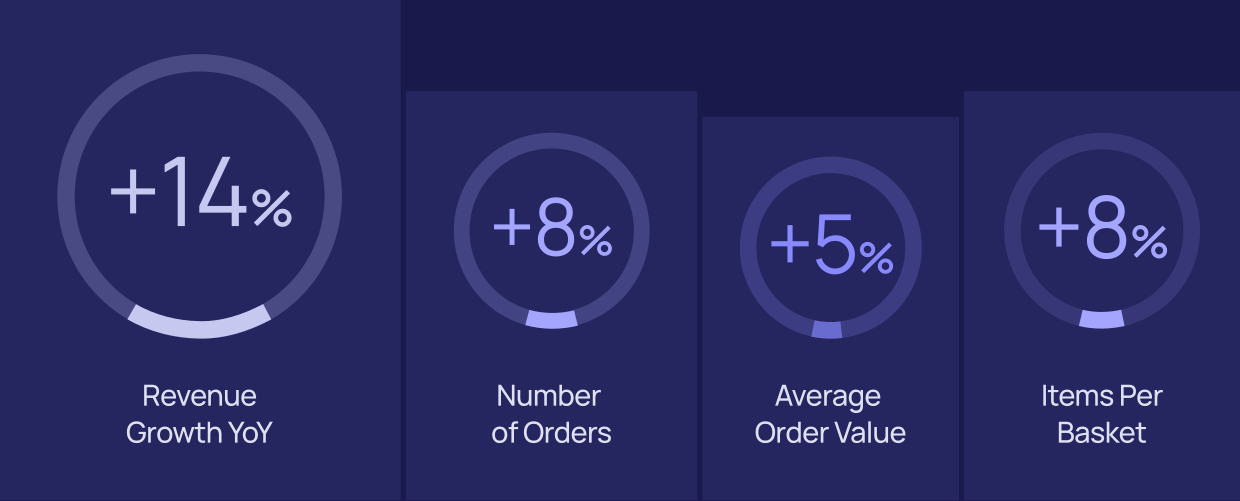
Ometria retailers grew revenue by 14% YoY, far exceeding industry forecasts of 1.5%–4%. This lift was driven by healthier spending signals across the board, with AOV up 5%, orders up 8%, and items per basket up 8%. Shoppers were not only spending at a higher level, they were also adding greater quantities to each transaction.

Ometria

Daily revenue grew across the period,
but Friday was still the focal point

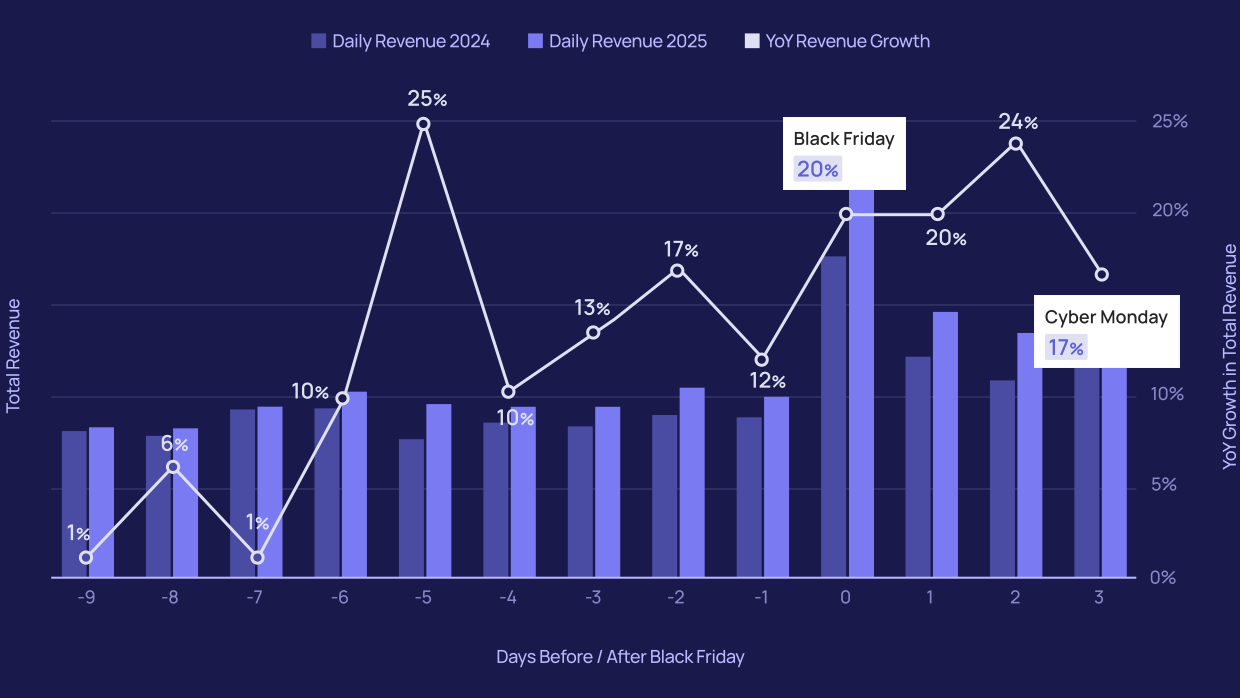
Though Black Friday itself is undoubtedly still the star of the show, 2025 saw significant revenue growth beyond the traditional peak, confirming that Black Friday is no longer just a day, but a season.

The biggest surge came early, with the Sunday before Black Friday posting the fastest YoY growth and reinforcing the build-up around the main event.

Notably, Cyber Monday slipped from its usual position as the second-biggest day for revenue as the Saturday after Black Friday surged by 20%.

Even so, the core rhythm of the season held steady, with Friday and the surrounding weekend drawing the heaviest activity.

Ometria
Ometria
Linked in

“The era of the one-day spike is over. Black Friday is now a season. Outperforming brands aren’t chasing a single peak; they’re engineering demand across a multi-week window. Treating it as a narrative arc gives retail marketers more control, more efficient spend, and a path to building loyalty beyond the rush.”

Julie Channing

Fractional CMO (ex-Allbirds, Google Nest, Levi’s)

Black Friday itself is still the single
biggest revenue driver

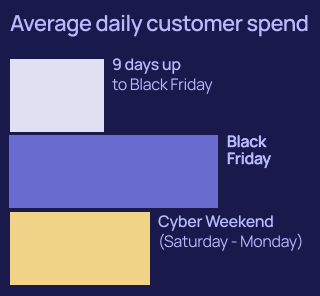
The broader season may be expanding, but spend per day still peaked decisively on Black Friday. Average daily spend was 121% higher compared with levels in the 9-day lead up to the event.

This pattern indicates that while shopping activity is spreading across the wider Black Friday season, the intensity of spend still centers on the day itself, with the surrounding weekend sustaining strong, though slightly lower, purchase behaviour.

Ometria

Almost every vertical saw positive
revenue growth

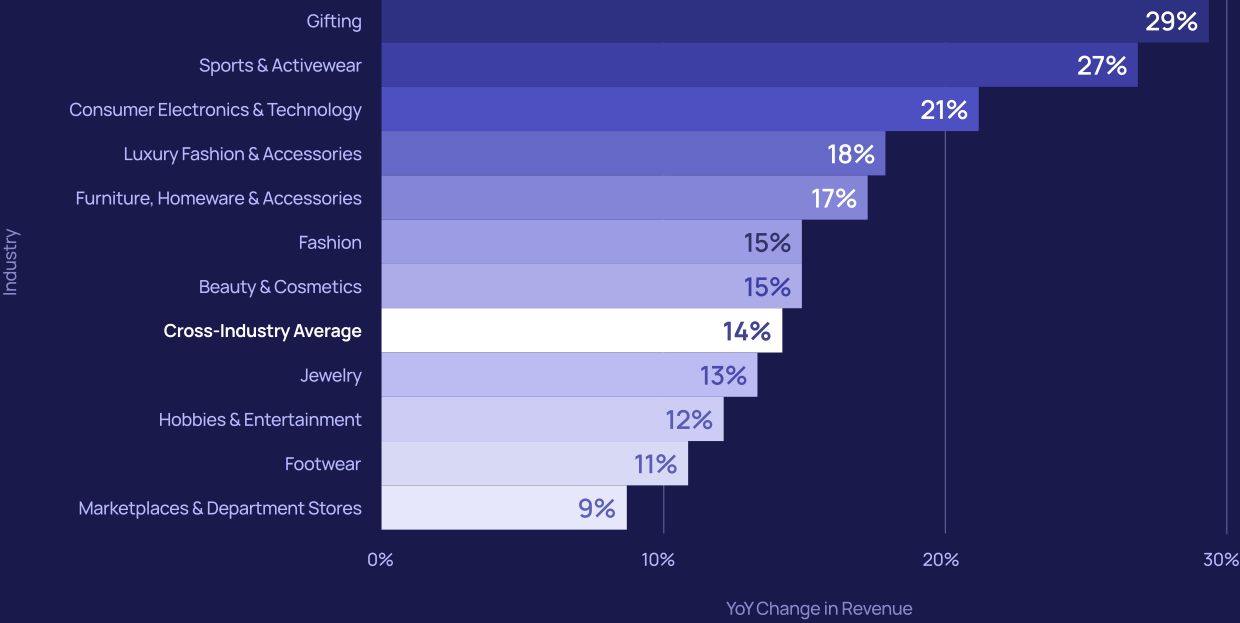
Gifting was the fastest-growing category, increasing 29% YoY as shoppers spread their festive spending earlier in the season. Many brands supported this shift by encouraging early wishlist creation ahead of Black Friday.

Sports & Activewear was close behind with 27% revenue growth, a category which continues to benefit from the ongoing wellness trend. Consumer Electronics and Luxury Fashion also posted healthy gains, showing broad-based demand across discretionary segments.

Most lifestyle categories grew at a steady pace, including fashion, beauty, jewellery, hobbies, footwear and marketplaces. Consumables was the only area to dip, posting a slight YoY decline, likely reflecting the fact that everyday essentials are less associated with Black Friday promotions and tend not to inspire the same stock-up behavior seen in more seasonal or discretionary categories.

Ometria
Ometria
Linked in

“Black Friday continues to bring in high-value gift buyers, but the real opportunity lies beyond acquisition. The brands winning are those that transform a purchasing moment into loyalty through true personalization and a clear understanding of shopper intent.”

Bridget Johns-Pavlopolous

Founder of To&From (Ex-Tiffany & Co., Lancome)

02

Marketing engagement

NaN%

Brands shouted loud, but customers listened when it was personal

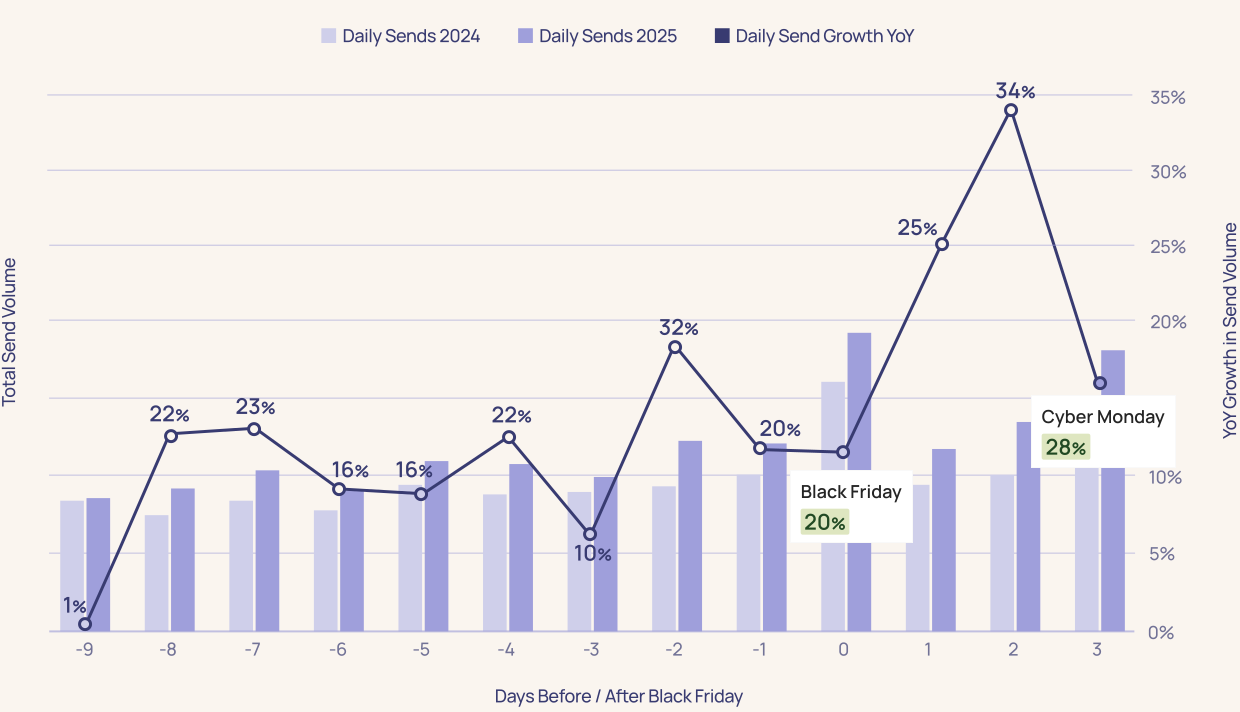
Brands sent more, with total sends across email, SMS, and push growing 21% YoY

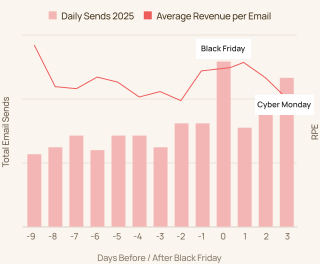
Black Friday remains the peak day for sends, closely followed by Cyber Monday and the rest of Cyber Weekend.

There was also notable growth in sends within the 7 days leading up to Black Friday, as brands continue to ramp up early engagement in a bid to attract customers in an increasingly crowded field.

The largest YoY spike occurred on the Sunday after Black Friday (+34%). The Wednesday before (+32%) and Cyber Monday (28%) also grew significantly.

Overall, brands appear to be spreading messaging across the full period, rather than concentrating solely on the major sale days, to activate, maintain, and maximize engagement throughout.

Ometria

Despite the sending bonanza,
revenue per email held strong

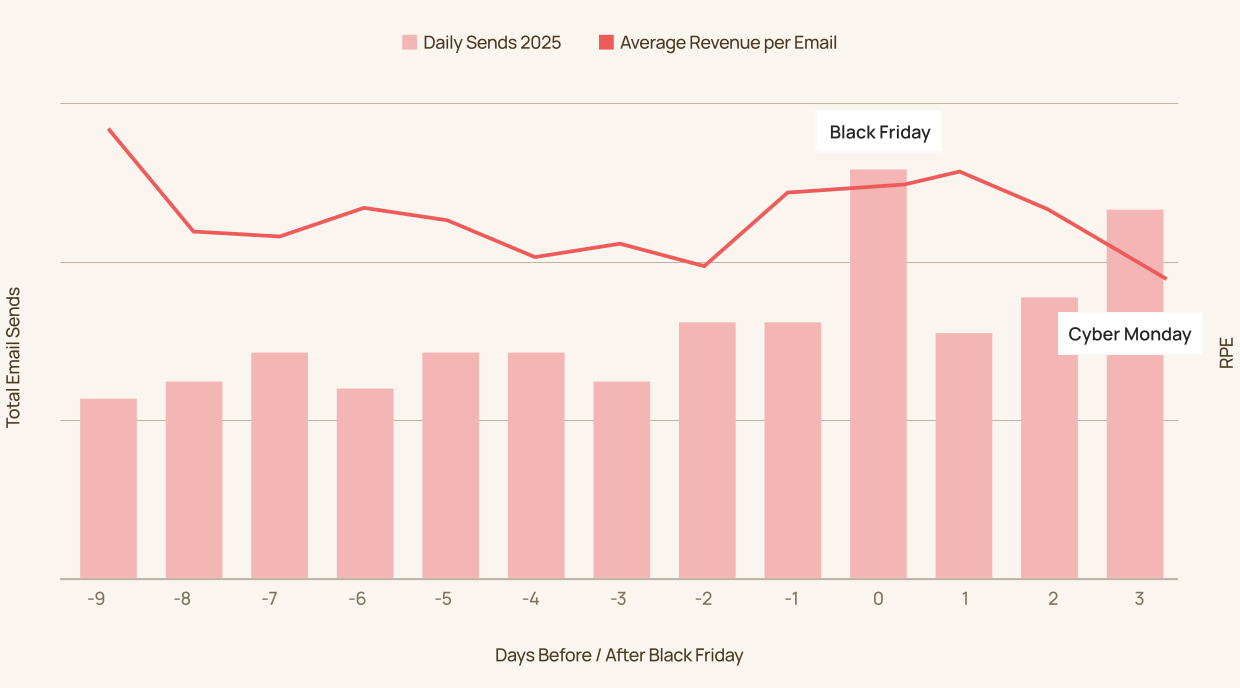
Despite the surge in sending, revenue per email remained resilient throughout the Black Friday period.

During the BFCM weekend peak itself, revenue per email increased even as brands sent significantly more messages. This runs counter to the usual inverse relationship between the two metrics and shows that shoppers were highly primed to purchase throughout the peak period. Rather than pushing customers away, the increased volume aligned with real demand and strengthened performance at the exact moment sends were at their highest.

Ometria

Broadcast drives reach,
automation drives conversion

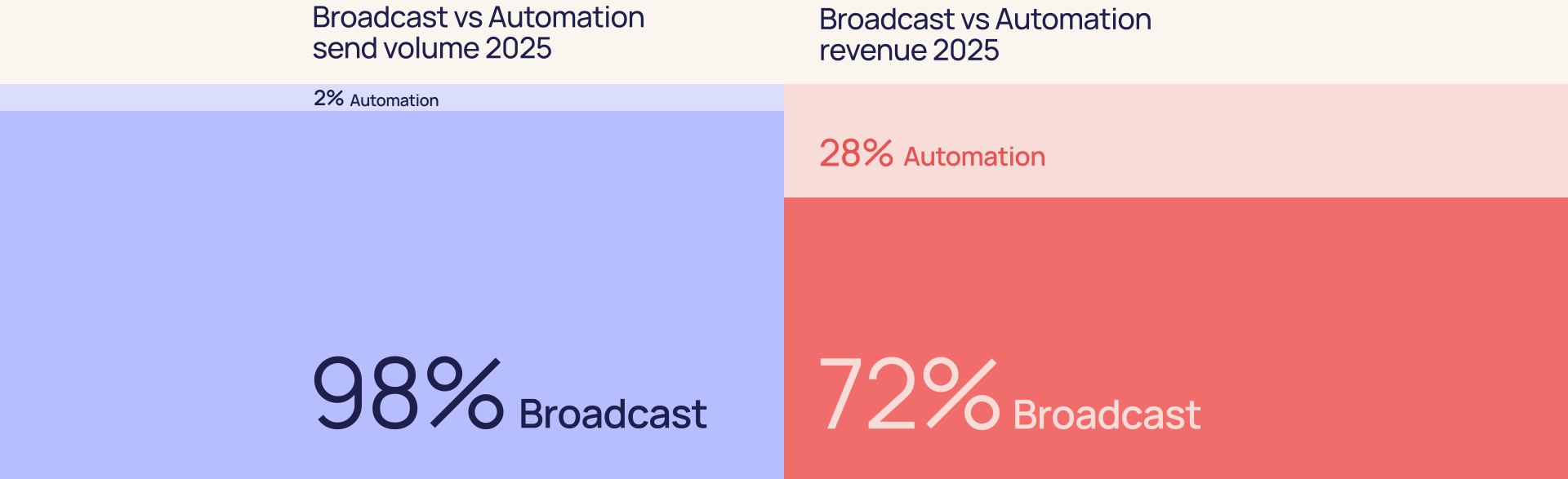
Broadcast emails dominated Black Friday activity, making up 98% of all sends and generating 72% of revenue. Their sheer scale reflects their purpose: reaching as many shoppers as possible during peak demand.

Automation told a very different story. Although automated emails accounted for just 2% of sends, they drove 28% of revenue, highlighting the power of personalized, behavior-triggered messages to convert shoppers who are already showing intent.

The contrast is clear. Broad outreach brings people in, but timely, relevant automation is what turns interest into revenue when it matters most.

Ometria

A mixed picture for engagement metrics, but not an unfamiliar one

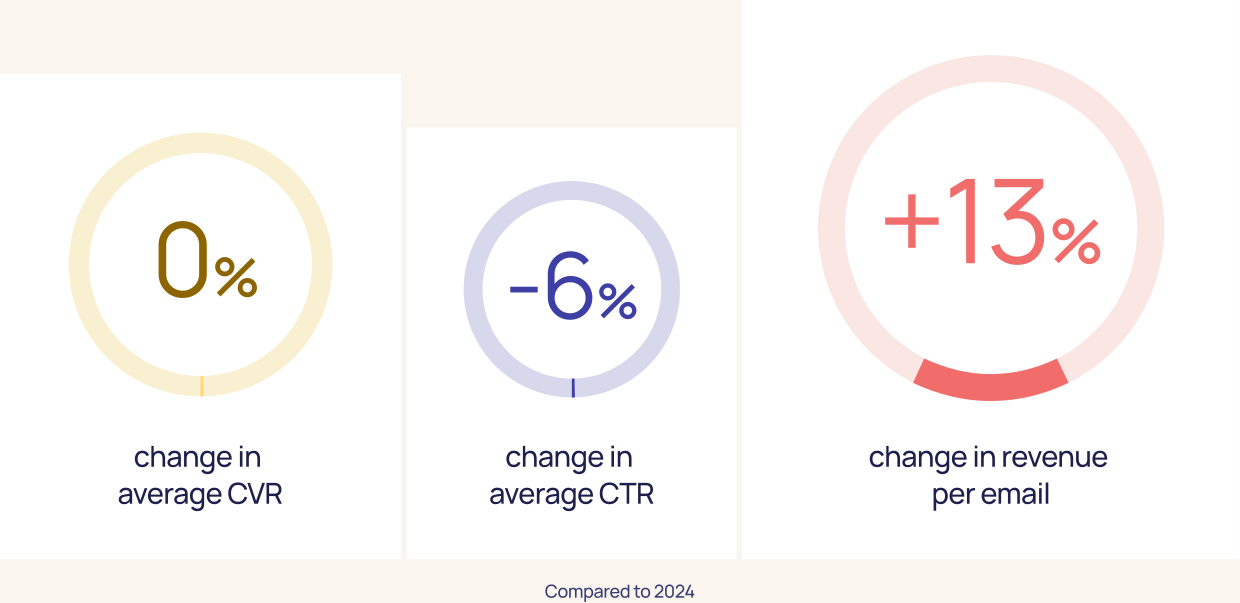
Engagement told a nuanced story. Key signals such as conversion rate, click-through rate, and revenue per email showed a blend of year-over-year gains and soft spots that many retailers will recognize.

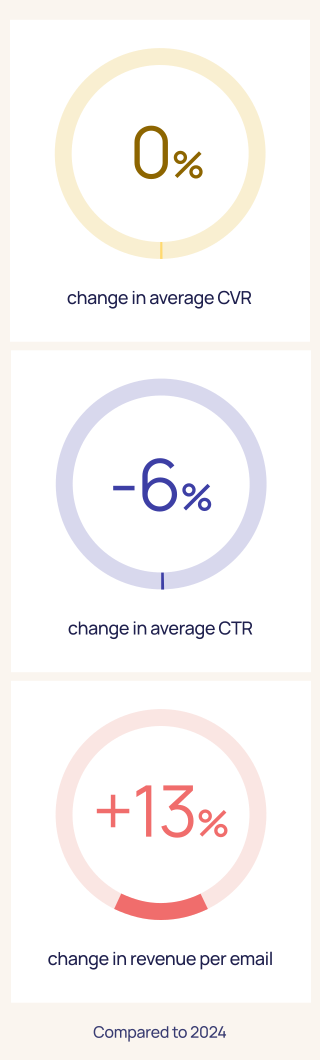
Revenue per email rose 13% YoY, indicating stronger value from each send. Click-through rates dipped 6% YoY, a likely result of higher message volumes this year than last, while conversion rates held steady. In other words, fewer people clicked, but those who did were just as likely to purchase.

These patterns will feel familiar. Email engagement continues to face industry-wide pressure, especially during high-intensity periods like Black Friday when inbox saturation peaks. Continued focus on personalization and relevance, supported by tactics such as personalized product recommendations and advanced segmentation, remains essential for cutting through.

Ometria
Ometria
Linked in

“As Black Friday stretches into a two-week marathon, the smartest margin play isn’t a louder promo. It’s smarter systems. Automations and personalization are doing the heavy lifting, driving outsized revenue from a tiny slice of sends. The brands that treat this period as a lifecycle engine, not a flash sale, will ultimately win.”

David Meir Sasson

CEO of Kindthread (Ex-Bonobos, Derek Lam)

Automation and behavioral marketing shouldn’t be overlooked

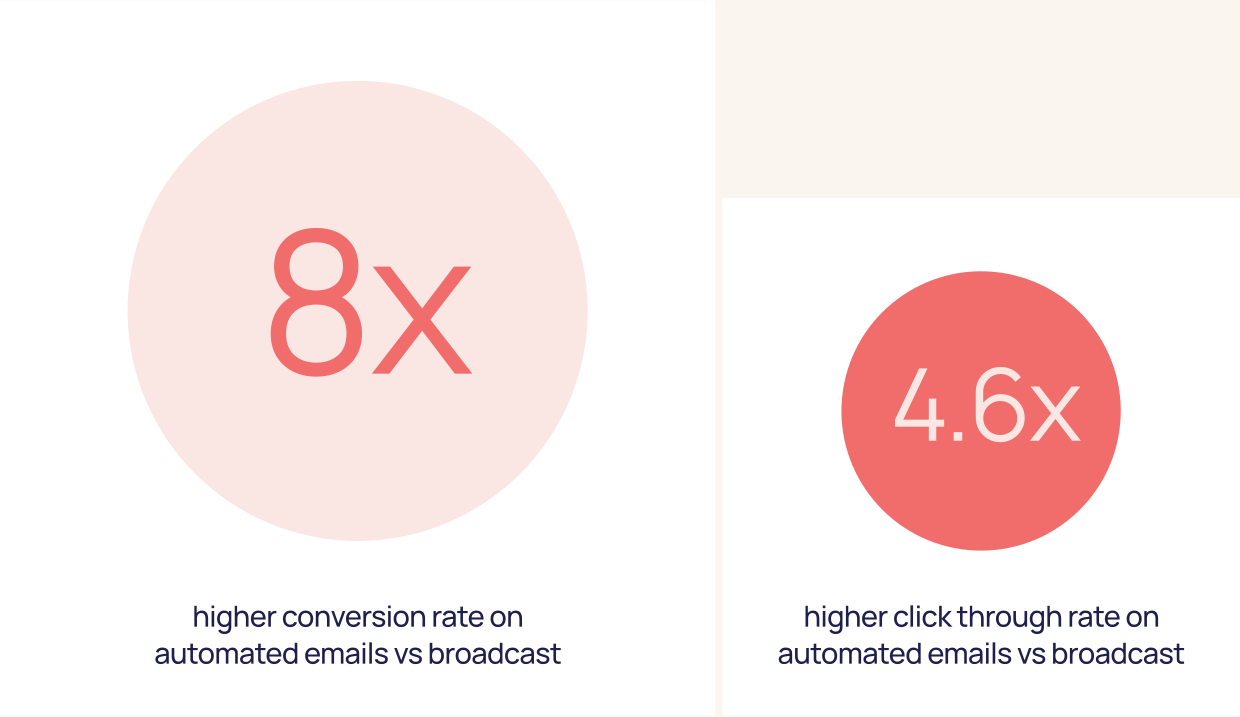
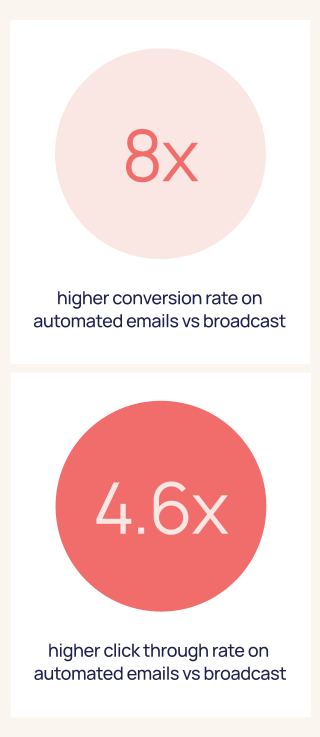
Automation’s outsized revenue contribution becomes clear when you look at engagement. Automated messages delivered a 4.6x higher click-through rate and an 8x higher conversion rate than broadcast emails. Their relevance and timing cut through the noise of the inbox and translate directly into action.

The takeaway is simple. During BFCM, retailers tend to pour most of their attention into broadcast strategy, but automation deserves equal focus. Tailoring triggered flows to the needs and behaviors of Black Friday shoppers can unlock significant incremental revenue that broad sends alone cannot achieve.

Ometria
Ometria
Linked in

Mass mailing is losing its edge, but personalization is thriving. Retail leaders should embrace AI to deliver tailored experiences that resonate and drive loyalty. This isn’t just a trend—it’s the blueprint for sustainable growth in a world where relevance beats reach.”

Jaap Van Riel

CTO, KnitWell Group (ex-Tiffany & Co., Avon)

Unsubscribe rates rose, but some
verticals were protected

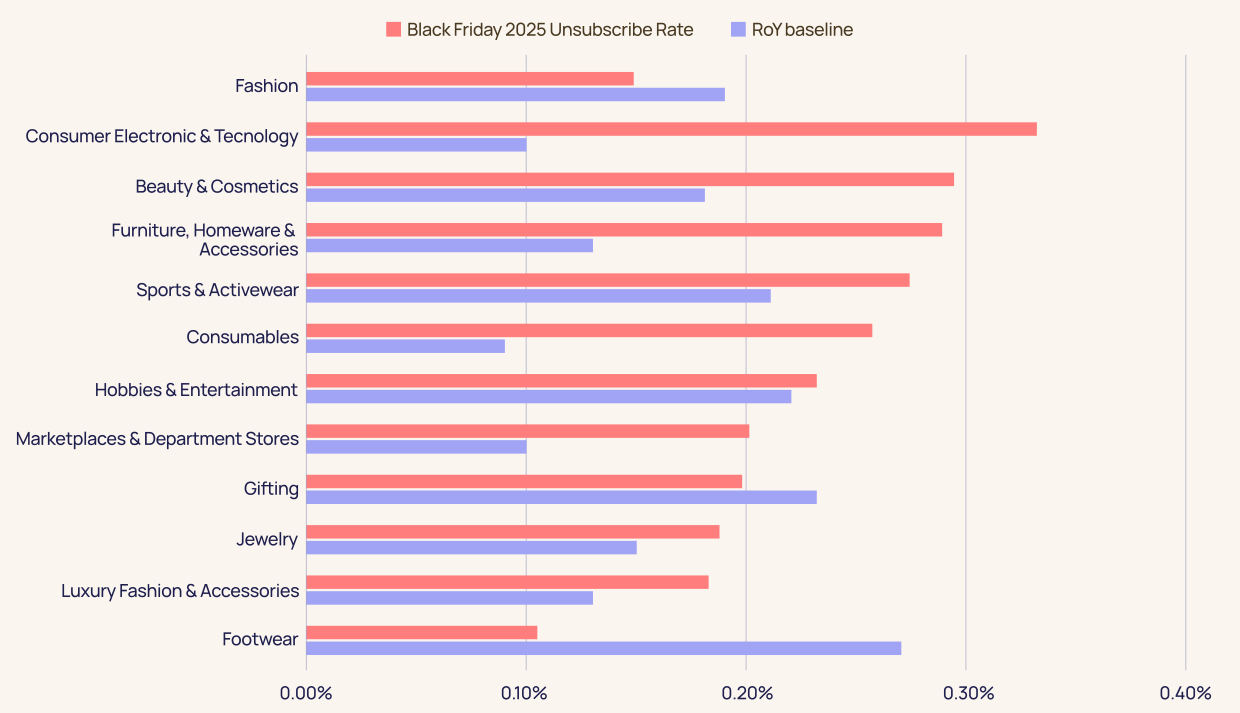
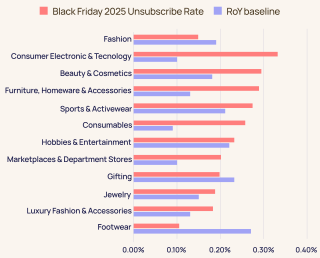
Unsubscribes rose 42% YoY during Black Friday 2025, reflecting the high-volume nature of the period and increased messaging across multiple channels dividing customer attention.

Category performance varied: Fashion, Gifting, and Footwear saw the lowest unsubscribe rates, the only verticals to reduce unsubscribes against their year-round benchmark, suggesting strong purchase intent and customer satisfaction with the deals on offer.

Consumer Electronics & Technology and Furniture, on the other hand, experienced the highest unsubscribe rates. As purchases within these categories tend to be more expensive and infrequent, this could indicate a more transactional relationship where customers sign up to get deals, then unsubscribe after purchase.

Ometria
Ometria
Linked in

“Shoppers are spreading their spending, demanding relevance, and rewarding brands that show up with precision and purpose. For retail marketers, this is the moment to get sharper with data, smarter with timing, and more human with experience to earn attention — and keep it.”

Ron Thurston

Senior Retail Advisor and 2x Best-Selling Author (Ex-GAP, Saint Laurent)

03

Top campaigns

NaN%

Top campaigns

Ometria
Ometria

Rewards > discounts

UNIQLO created a brand-oriented campaign called Arigato Festival, instead of focusing on discounting. This storytelling moment inspired shoppers with gifts, prizes, and the chance to win a trip to Japan.

Ometria
Ometria

Encouraging repeat engagement

AllSaints tweaked their welcome flow for Black Friday, offering new customers 10% off their next order. The catch? The code could only be used from December 2nd, a smart move to tempt first-time shoppers back once the big Black Friday discounts are done, protecting margins.

Ometria
Ometria

Black Friday for a good cause

Since 2018, Lucy & Yak have used Black Friday as an opportunity to give back, donating 50% of all profits made over the weekend to the Fior di Loto Foundation, who support girls in the Indian village where their dungarees were first made to go to school.

Ometria
Ometria

Option to snooze

It’s no secret: Black Friday is synonymous with receiving
a barrage of marketing messages. So, Boux Avenue gave customers the chance to opt out, minimizing fatigue
and churn.

Ometria
Ometria

Growing new channels

The Black Friday period is longer than ever, and RIXO used the build-up as an opportunity to grow their SMS list, letting subscribers know “We’ll text you first”.

Ometria
Ometria

Win your wishlist

Keeping customer engagement up across the lengthy Black Friday period is a key challenge. Astrid & Miyu’s solution? Using a wishlist CTA to encourage shoppers to browse and plan their spending ahead of the big day.

04

Customer loyalty trends

NaN%

New and existing customers came out in force, the challenge is tempting them back

A strong blend of customers delivered a well-balanced revenue mix

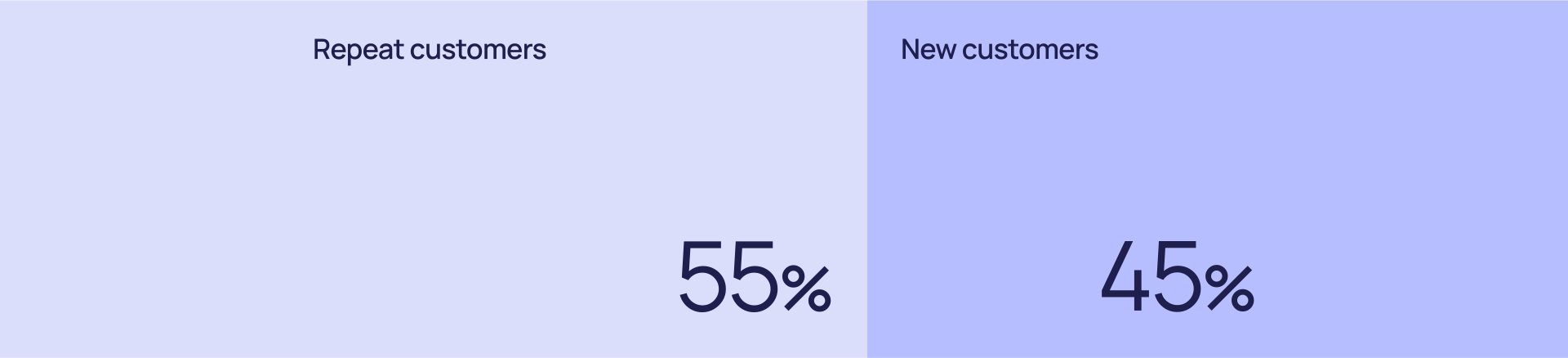
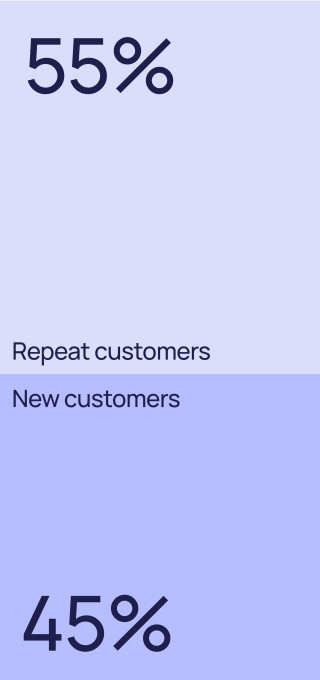
This year’s Black Friday revenue closely mirrored last year’s near-even split, with 45% of sales from new customers and 55% from existing customers. The steady balance shows that brands continue to perform well on both acquisition and retention, bringing new shoppers into the funnel while successfully activating their loyal base.

As expected, returning customers also spent more than new shoppers, reinforcing the value of continued investment in the existing customer base and the outsized revenue impact of long-term loyalty.

Ometria

Dual-engine growth from new
and existing customers

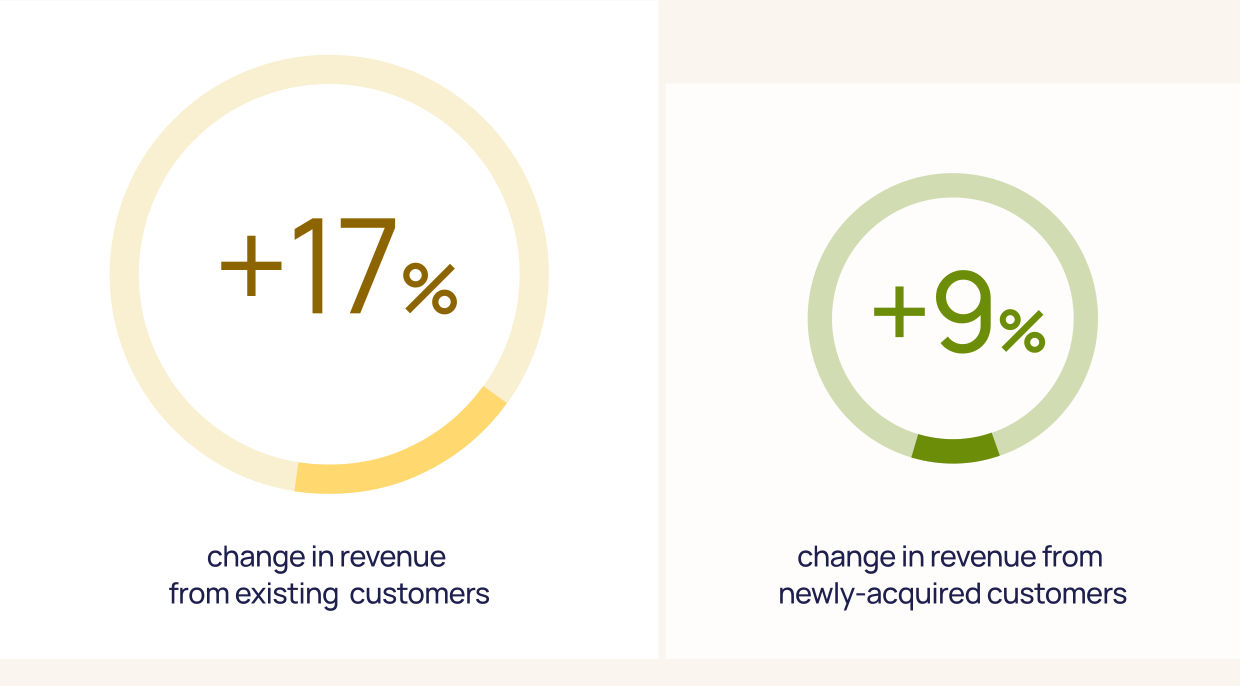
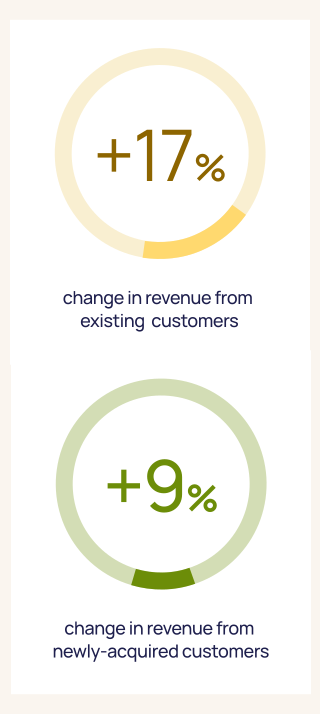
Both customer groups saw strong revenue growth this Black Friday, with a 9% increase from new shoppers and a 17% lift from existing customers. This upswing signals broader momentum in customer spending, as brands generated higher value from every segment rather than relying on a single source of growth.

Ometria
Ometria
Linked in

"Black Friday isn’t a day anymore — it’s a four-week endurance event, ending with brands clawing for the last slivers of margin.


Yes, peak was higher than last year. Great. But is that actually good news? Cramming more revenue into your lowest-margin days feels a lot more like survival than success.


Inventory’s tight. COGS is up. Margins are wafer-thin. Media costs? A runaway train. The brands that win this season aren’t the loudest—they’re the smartest. The ones who stretched their media dollars with precision, drove demand around high-margin products, and treated cost control like a competitive sport."

Mike Dupuis

SVP of Ecommerce, Samsung Electronics America (ex-Calvin Klein, Catalyst Brands - Aeropostale, Brooks Brothers, Nautica)

Ometria

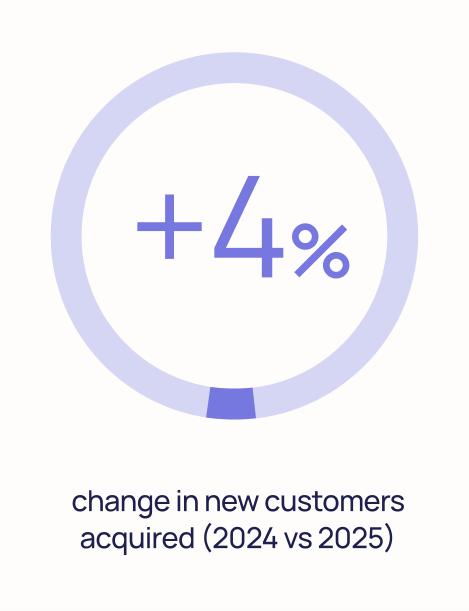
Retailers acquired slightly more customers over Black Friday 2025 than in 2024

Retailers saw a modest improvement at Black Friday 2025, with new customer acquisition up 4% compared to 2024.

This data illustrates how the period continues to play a critical role in attracting new shoppers, as consumers take advantage of deals to explore new brands and discover products.

The increase suggests that promotional strategies remain effective in driving first-time engagement, but the real challenge is securing their loyalty…

Ometria

New Black Friday
customers are a tough crowd to retain

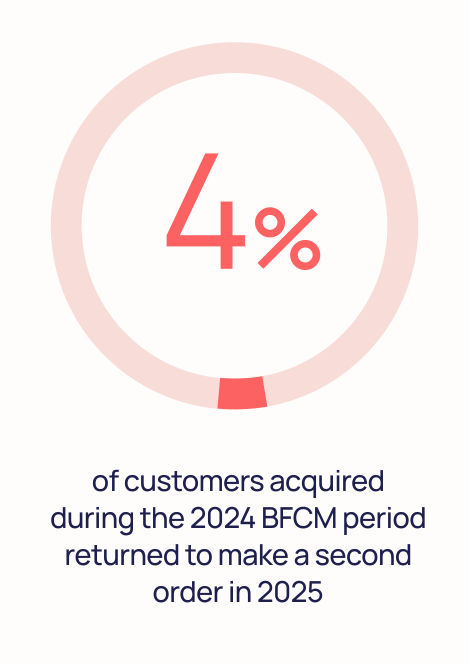
Black Friday new customers were six times less likely to make a repeat purchase than the typical new customer.

Just 4% of shoppers acquired during Black Friday 2024 made a second purchase within 12 months, and three quarters of those returns happened during Black Friday 2025 rather than through full-price or non-peak shopping.

This pattern confirms that Black Friday shoppers are highly deal-driven and less likely to become valuable long-term customers without targeted support. Brands need a dedicated onboarding and post-purchase strategy that nudges these customers toward a second purchase sooner, builds value outside peak discounting, and gives them a reason to return before the next Black Friday rolls around.

Ometria
Linked in

“Black Friday keeps proving that customer experience is the real growth engine. Higher AOVs show shoppers are willing to spend when the value is clear, but the retention gap is a wake-up call. Winning brands won’t chase the spike; they’ll use it to build relationships that last beyond November.”

David Meir Sasson

CEO of Kindthread (Ex-Bonobos, Derek Lam)

11% of all 2024 Black Friday shoppers
came back for Black Friday 2025

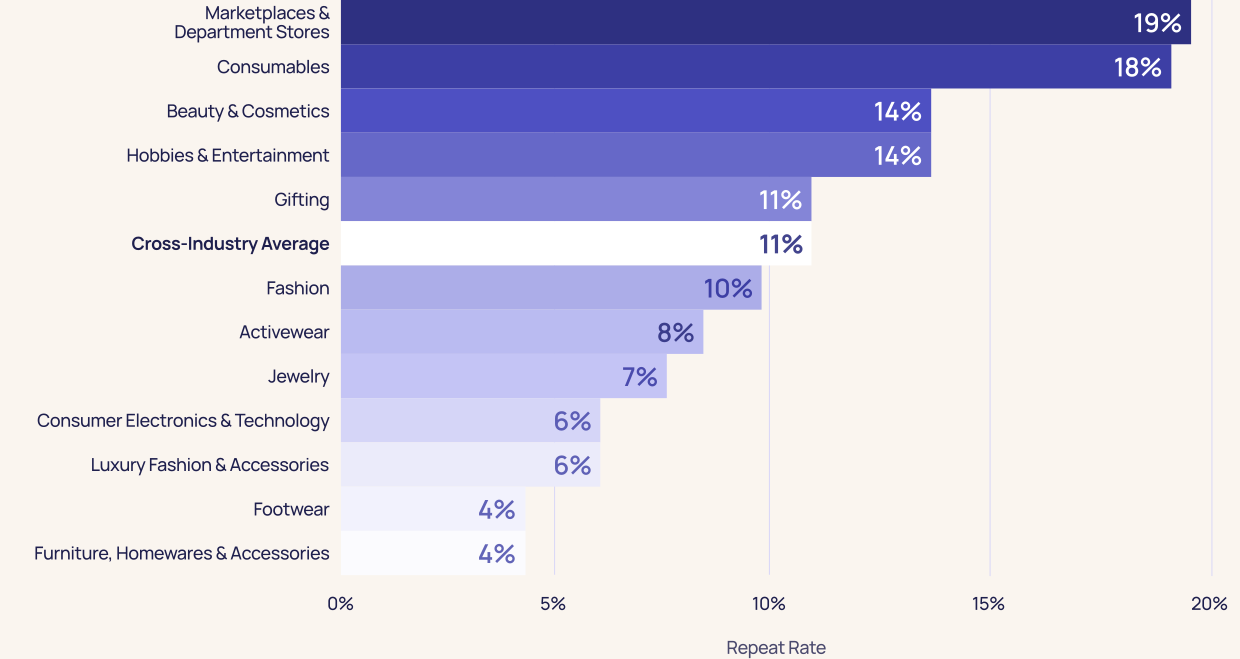
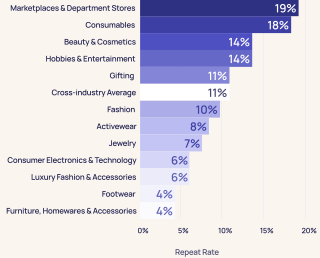
Overall, 11% of shoppers who purchased during Black Friday 2024 returned to shop again during Black Friday 2025. Repeat rates were highest in Marketplace and Department Stores (19%), followed by Consumables (18%) and Beauty & Cosmetics (14%), categories where purchases are typically more frequent or lower in value.

Repeat rates were lower in Furniture, Homeware & Accessories, Footwear, and Luxury Fashion, where buying cycles are longer and purchases are less likely to be driven by annual promotional events. The data suggests that repeat Black Friday participation is strongest in categories that naturally lend themselves to replenishment or habitual purchasing, rather than big-ticket or occasional spend.

Ometria
05

Conclusion

NaN%

Black Friday is booming:
But winning brands are already thinking beyond the spike

If Black Friday 2025 proved anything, it’s this: the season isn’t slowing down any time soon. Revenue surged, engagement held firm, and shoppers (both new and existing) showed up in force across the full two-week window.

But the retailers who will finish the winter season strongest, and walk into 2026 with real momentum, are the ones treating this data as direction.

The data is clear:

  • Black Friday still delivers for retail. Revenue grew 15% across almost every vertical. The biggest weekend in retail is still exactly that.
  • The Black Friday sprawl is real, but Friday remains the anchor. Shoppers are spreading their spend across the build-up and the weekend, but Black Friday itself still drives the highest concentration of revenue.
  • Personalization cut through the noise. Automated, behavior-based emails made up only 2% of sends yet drove 28% of email revenue, proving highly targeted messaging outperforms broad blasts.
  • Unsubscribes rose, but not evenly. Unsubscribe rates jumped 42% YoY overall, though Fashion, Gifting and Footwear were protected thanks to stronger intent and clearer value.
  • Loyalty remains the biggest gap. Black Friday shoppers are still highly transactional. Only 4% of customers acquired during Black Friday 2024 made a second purchase during the following 12 months.


So what now? How should you use this?

For the rest of Q4:

  1. Follow up with new Black Friday customers quickly (but not too intensely). They cool fast. Use welcome journeys, replenishment nudges and personalized product recommendations to move them toward a second purchase.
  2. Re-run your strongest Black Friday tactics in lighter, more targeted forms. Look at which content performed best from a click perspective and consider doubling down. If a segment responded well to certain categories or incentives, keep that momentum going through December.
  3. Shift your focus to higher-margin products. Shoppers showed they are still willing to spend if the value is clear.

Want more best-practice guidance on nailing the post-Black Friday period? Check out our Post-Black Friday Checklist.

For planning 2026:

  • Strengthen your lifecycle programs. The performance gap between broadcast and automation shows your automated flows could carry more of the load year-round.
  • Reduce unsubscribe risk by improving segmentation and message spacing outside peak periods. The brands with the lowest churn were those that entered Black Friday with already-engaged audiences.
  • Build clear pathways to a second purchase to unlock new revenue from loyalty. For example, build post-purchase and churn prevention flows based on the products that attracted customers in, using AI to determine which categories or products they may have an affinity for.

For Black Friday 2026:

  • Treat Black Friday as a multi-week campaign, not a single weekend. Spread your storytelling, acquisition pushes and early access moments across the full period.
  • Use automation as a conversion engine. Expand browse, abandon, replenishment and post-purchase journeys specifically for Black Friday behaviors.
  • Prepare a truly cross-channel approach. Look at your owned channels holistically, and determine what role each will play in your strategy, maximizing based on cost per message / ROI.
  • Protect your margin by engineering demand around products where you win, not just products you discount.

Get the Ultimate Black Friday Guide for our comprehensive deep-dive on driving a truly impactful Black Friday.

The takeaway is simple. Black Friday will keep growing, but retailers who grow with it are the ones who use this data to build smarter systems, stronger experiences and more loyal customers — not just deeper discounts.


2025

© Ometria Ltd. All Rights Reserved